
My Client Didn't Get the Email
Find out what happened to an invoice, reminder or invitation email (bounced, marked as spam, never sent, or delivered and missed), fix the address and send it again.
On this page
When a customer says the invoice never came, or a client can't find their invitation, Books can usually tell you exactly what happened: whether the email left, whether the receiving mail server took it, refused it, or whether the person reported it as spam. Start from the email's history, not from a guess.
An address that bounced or reported spam isn't emailed again. When an invoice or reminder email bounces or is marked as spam, Books puts the address on your firm's do-not-email list. Any later invoice, reminder or statement to it is refused with the reason, for example Invoice INV-1048 is not emailed to biling@blueheroncafe.example: this address is on the firm's do-not-email list (bounced). Correct the customer's email, or send it to another address. Client questions and invitations to it aren't emailed either. The fix is always a different address.
Step 1: Find what happened
Open the client's Invoices list. The Delivery column shows the latest email for each invoice:
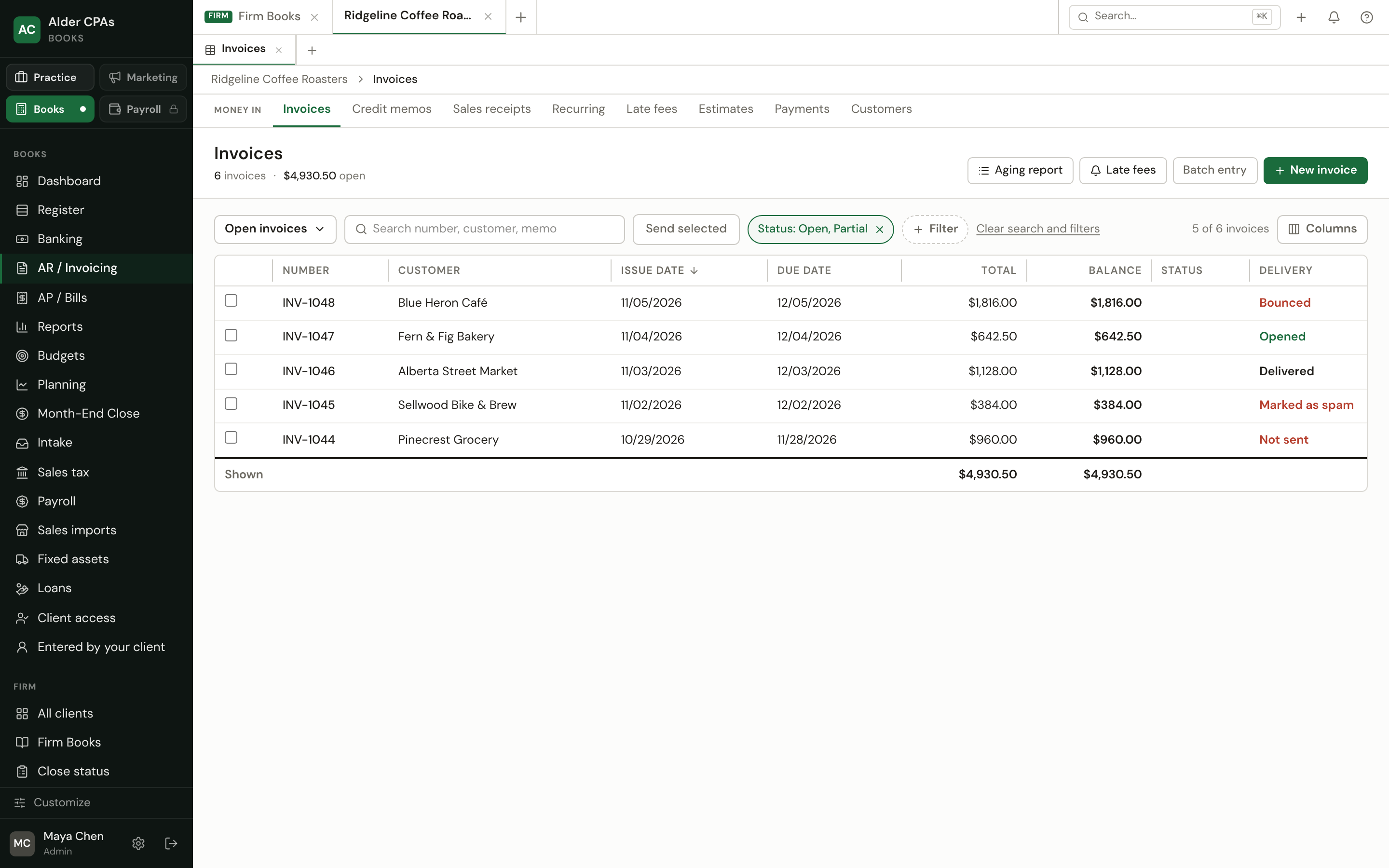 The Invoices list with its Delivery column: Bounced, Opened, Delivered, Marked as spam and Not sent
Then open the invoice. Its Delivery section shows the address the email went To and each step, latest at the top, most with the date and time.
| What you see | What it means | Go to |
|---|---|---|
| Bounced | The customer's mail server refused the email. | It bounced |
| Marked as spam | The customer reported the email as spam. | It was marked as spam |
| Not sent | The email never left. | It was never sent |
| Queued or Sending | It is still on its way. | It is still going out |
| Sent, Delivered or Opened | It left, and nothing came back refused. | It was delivered, but they can't find it |
| Not emailed | The invoice was never emailed. | Use Send on the invoice. |
It bounced
A bounce shows the receiving mail server's own words, such as The receiving mail server said: The email account that you tried to reach does not exist. That usually means a typo or an address that no longer exists.
A full mailbox shows here too, as Bounced, with The recipient's mailbox is full, so the email bounced. Ask the customer to make room or to give another address. When the server gave no reason, or only a short code, the step reads The receiving mail server refused this email. Check the address on the customer record.
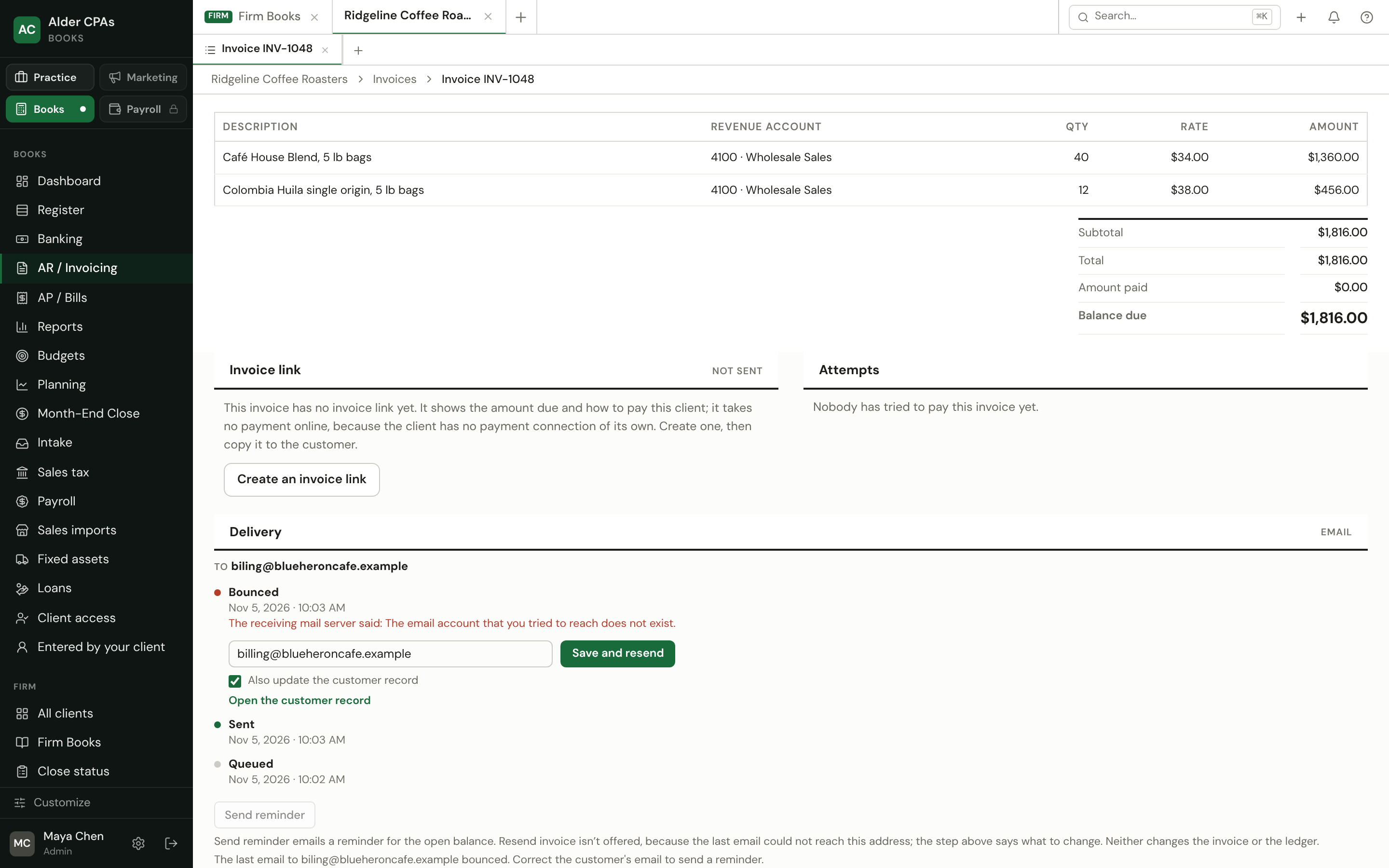 An invoice whose email bounced, with the corrected address typed in, ready to Save and resend
-
Check the To address against what the customer gave you. In the picture, biling@ is missing an "l".
-
Type the right address in the box under the bounce.
-
Leave Also update the customer record checked, so the next invoice and reminder go to the right place. Clear it only to send to this address this one time.
-
Click Save and resend. With Also update the customer record checked, Books first runs every check the send would run against the new address.
If the send would be refused, you see why and the customer record stays as it was. Otherwise Books saves the address on the customer, sends, and says Queued to send again to billing@blueheroncafe.example. The customer record now has this address. A new email starts at Queued.
Save and resend stays off, and says why when you hover it, until the address is a real email address that differs from the one that bounced: Correct the address first; this is the one that bounced. To change more than the email, Open the customer record is under the box.
Until the address is corrected, the buttons under the history follow the bounce: Resend invoice isn't offered, and Send reminder is off with the reason under the buttons: The last email to biling@blueheroncafe.example bounced. Correct the customer's email to send a reminder. If you change the email on the customer record instead of using the box, both come back when you return to the invoice, because the customer's email is no longer the one that bounced.
Resend invoice and Send reminder go to the customer's email as it is now, so Books judges them by the latest email sent to that address.
If you cleared Also update the customer record and sent to another address this once, the bounced step moves under Earlier emails, but the customer's email is still the one that bounced: Resend invoice still isn't offered and Send reminder stays off, with the same reason, until you correct the customer record. A customer email with two addresses separated by a comma is treated as one list, in any order.
It was marked as spam
Marked as spam by the recipient means the customer reported the email as spam. Books puts that address on your firm's do-not-email list, and the step says so: This address is now on the do-not-email list, so the invoice cannot be emailed to it again. Reach the customer another way, or send to a different address.
Resend invoice isn't offered, and Send reminder is off, with the reason under the buttons: The last email to hello@sellwoodbikebrew.example was marked as spam, so that address is on the do-not-email list. Change the customer's email to send a reminder.
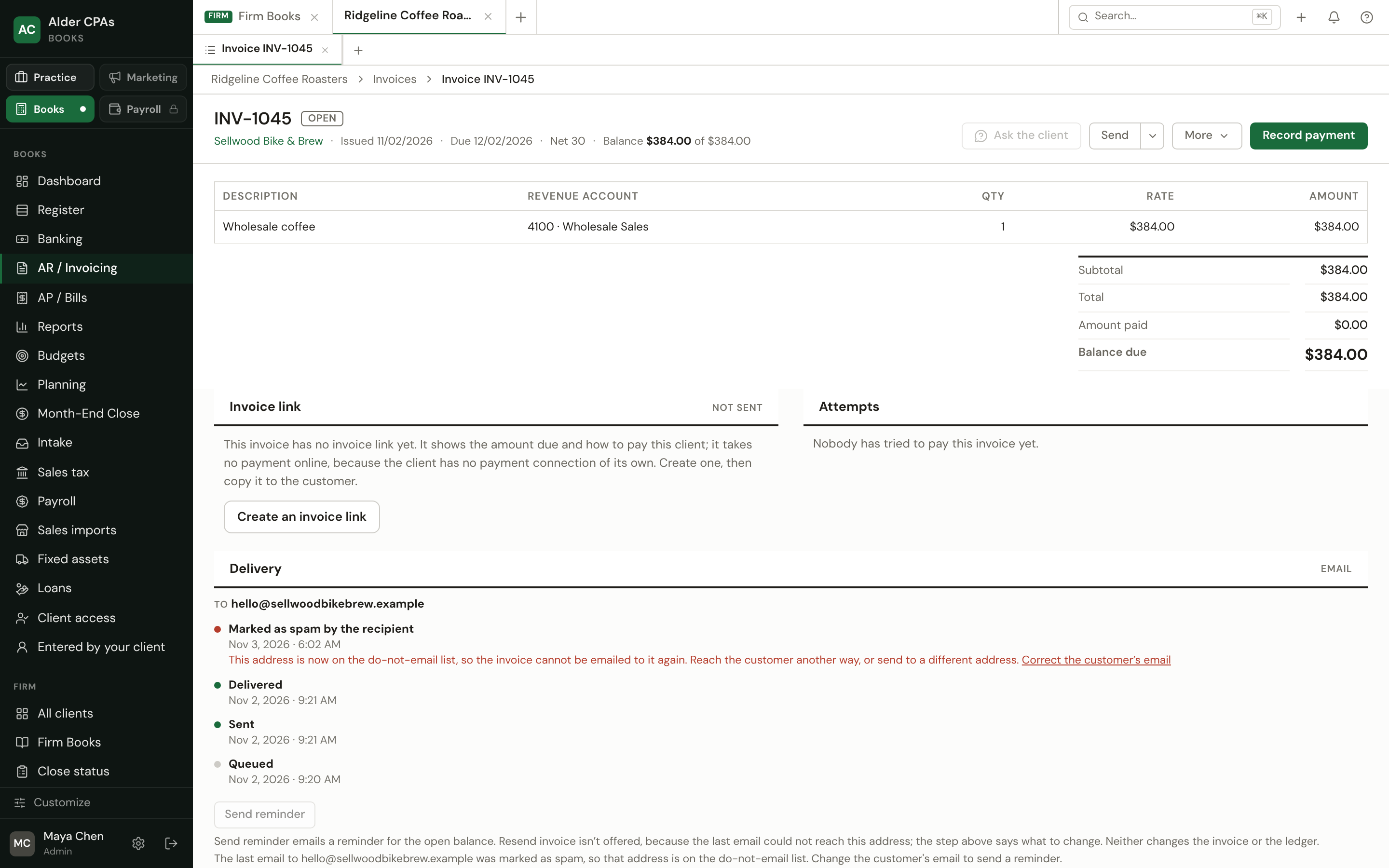 An invoice whose email was marked as spam: the reason, the Correct the customer's email link, no Resend invoice, and Send reminder off with its reason
Call or message the customer and agree on another address. Then:
- Click Correct the customer’s email beside the message. It opens the customer record.
- Change the email there and save.
- Come back to the invoice. Because the customer's email is no longer the address that reported the spam, Send reminder and Resend invoice are offered again. Resend invoice opens the send panel addressed to the customer's email, the new one.
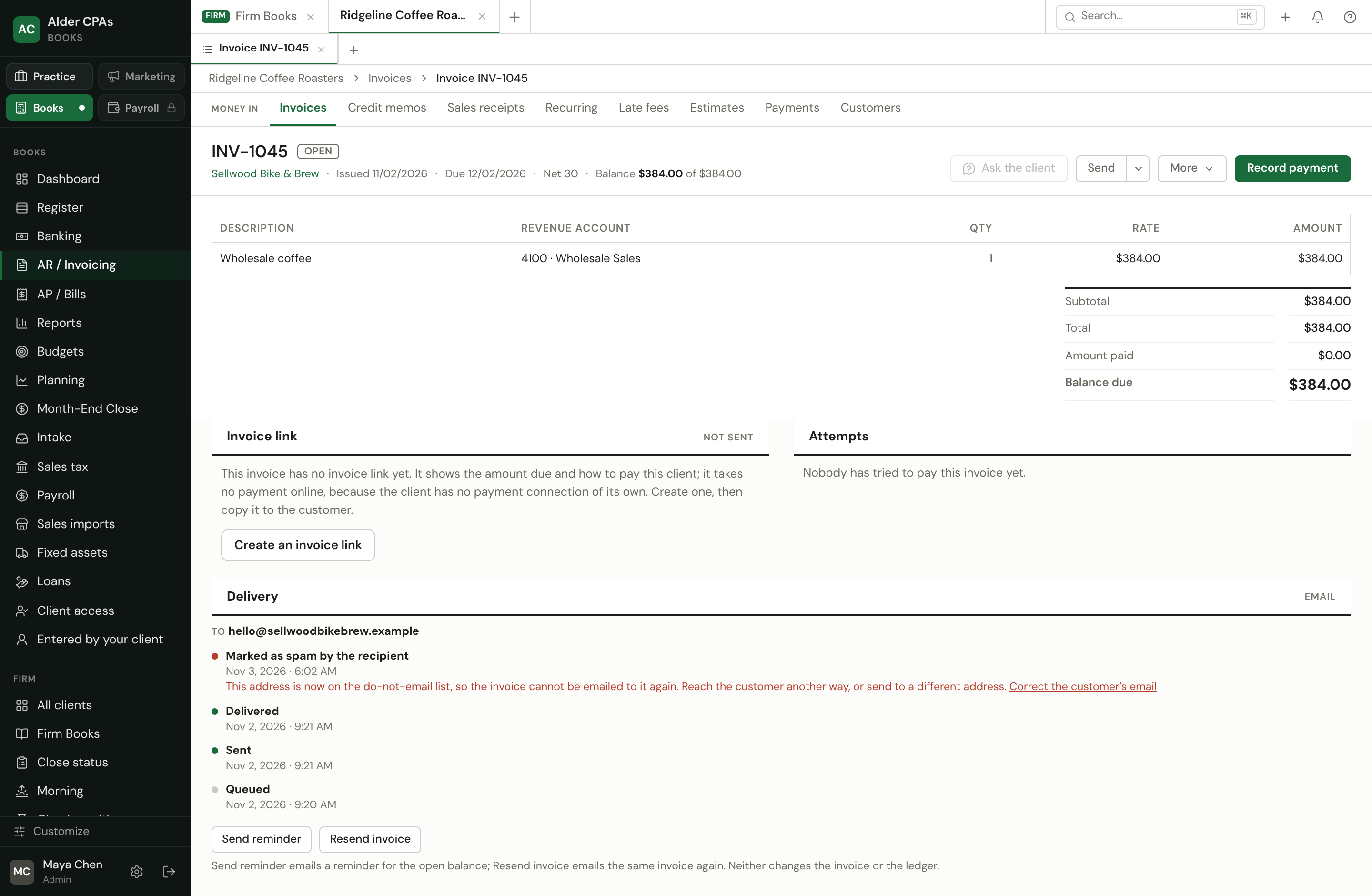 The same invoice after the customer's email was changed: Send reminder and Resend invoice are back
The spam step stays in the history; it records what happened to that email.
It was never sent
Not sent means the email didn't leave. The line under it says why:
| The invoice says | What to do |
|---|---|
| The customer had no email address when it was sent. Add one on the customer record, then resend. | Add the email on the customer, then Resend invoice. |
| The PDF could not be made, so nothing was emailed. Resend to try again. | Click Resend invoice. |
| The invoice could not be made for the email, so nothing was emailed. followed by Books' reason, or by Resend to try again. | Fix what the reason names, then click Resend invoice. |
| This address can't receive email; change the customer's email to send it. | The address can never receive mail (for example, a made-up test domain). Resend invoice isn't offered and Send reminder is off (The last email to … could not be delivered to that address. Change the customer's email to send a reminder.). Change the customer's email on the customer record; back on the invoice, both are offered again. |
| The email service rejected this address as not valid. Check the customer's email, then resend. | Correct the address on the customer record, then click Resend invoice. |
| The email service refused the firm’s sending account, so nothing was sent. Resend later; if it keeps failing, contact support. | Try again later; if it keeps happening, contact support. |
| The email service limited how fast the firm can send, so this email did not go out. Resend later to try again. | Wait, then click Resend invoice. |
| The email service had a problem, so nothing was sent. Resend to try again. | Click Resend invoice. |
| The email service did not accept this email. Resend to try again. | Click Resend invoice. |
| The email could not be sent. Resend to try again. | Click Resend invoice. |
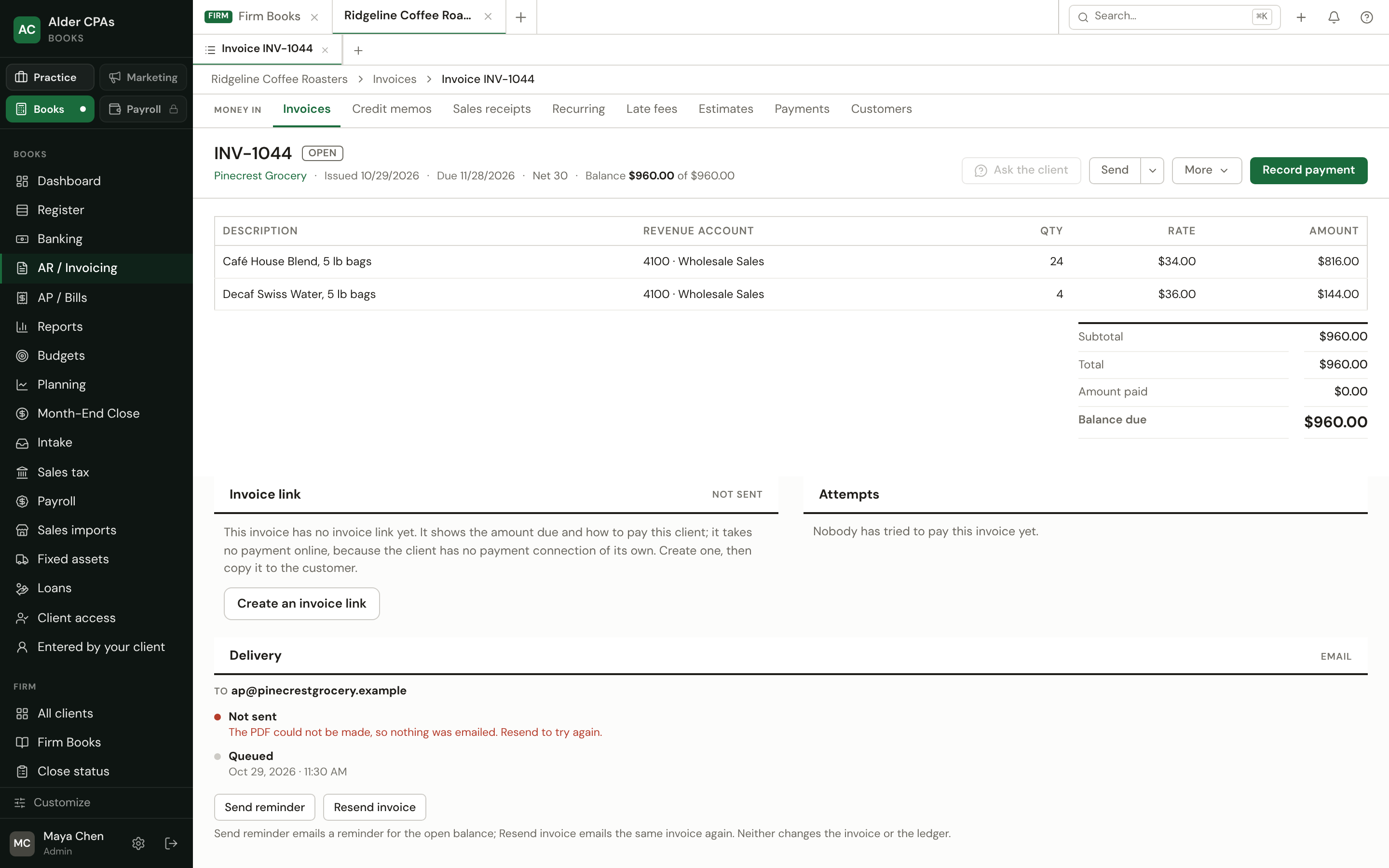 An invoice whose email was not sent because the PDF could not be made
If the customer has no email address at all, Books won't send in the first place: Blue Heron Café has no email address. Add one on the customer record. (On Send: Blue Heron Café has no email address. Use Send with options to type one, or add one on the customer record.)
It is still going out
Queued and Sending mean the email hasn't left yet. While it is on its way, Books won't start a second one for the same invoice and tells you so: Invoice INV-1048 is already being sent to billing@blueheroncafe.example. Wait for it to go out before sending it again. Give it a few minutes, then reopen the invoice.
An email stuck at Sending for more than 15 minutes no longer blocks a new one: when you send again, Books marks the stuck one Not sent and queues the new one. The stuck email moves under Earlier emails, and its line reads The sending stopped part-way through this email, so it may or may not have reached the customer. Check with them before you send it again.
It was delivered, but they can't find it
Delivered means the customer's mail server accepted the email; Opened means the customer opened the email (recorded when your firm has open tracking on, under Settings → Account → Communications; see Client emails: who they come from and when they fail). If they still can't find it:
- Ask them to search their spam or junk folder, and to add your sending address to their contacts.
- Check the To address on the invoice. A delivered email to an old address is still in the wrong inbox.
- Check whose name it came from. An invoice from a client's books comes under that business's name, not your firm's, so search for the business name.
An invitation bounced
When an invitation email fails, Books says so where the invitation is listed, and names what happened: Bounced, Marked as spam, Unsubscribed or Not delivered.
On the client's Client access page, the label sits in the person's Status cell under Invited, and the reason runs on its own line beneath the row, for example The invitation email to luis@ridgelinecofee.example bounced, so it was not delivered. Check the address, then resend.
| Label | What to do |
|---|---|
| Bounced or Not delivered | Check the address, then send the invitation again (below). |
| Marked as spam | The person at luis@ridgelinecofee.example marked an earlier email as spam, so the invitation was not delivered. Reach them another way, or invite a different address. |
| Unsubscribed | luis@ridgelinecofee.example unsubscribed from the firm’s email, so the invitation was not delivered. Reach them another way, or invite a different address. |
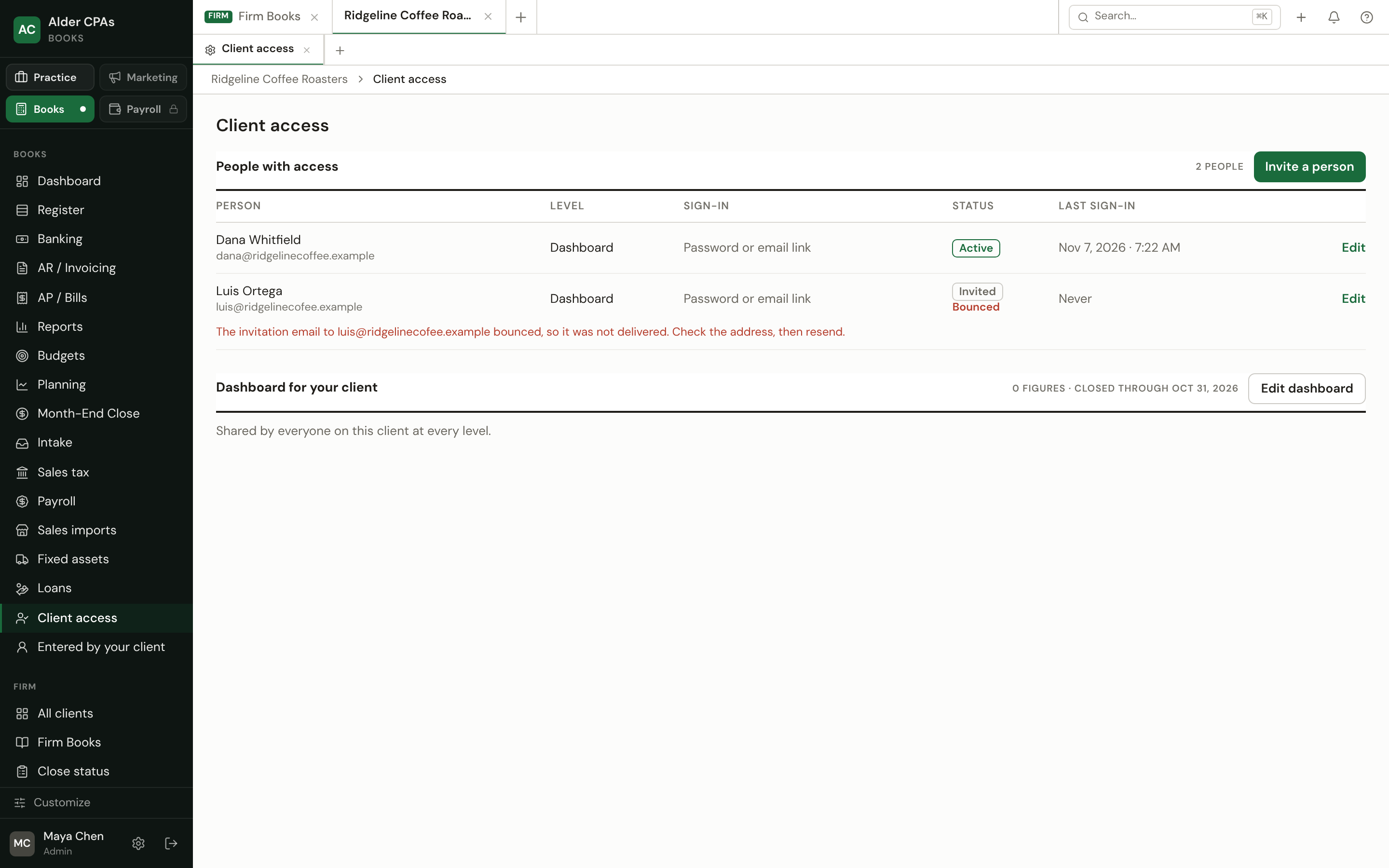 Client access with an invitation that bounced because of a misspelled domain
-
The address was wrong: click Edit on the person's row, then Withdraw invitation, and invite the right address with Invite a person.
-
The address was right (say their mailbox was full): click Invite a person and enter the same address. When you move on from the email box, Books recognizes the waiting invitation, fills in the level, permissions and closed-period setting it was sent with, and says so, for example Luis Ortega is already invited at Dashboard. Sending again sends a new link and keeps that level. Click Send invitation.
Books sends a new link, good for 7 days, and the old link stops working. If you pick a different level first, the line says the invitation goes at that level instead (…keeps that level, unless you send it at Reports as picked below.).
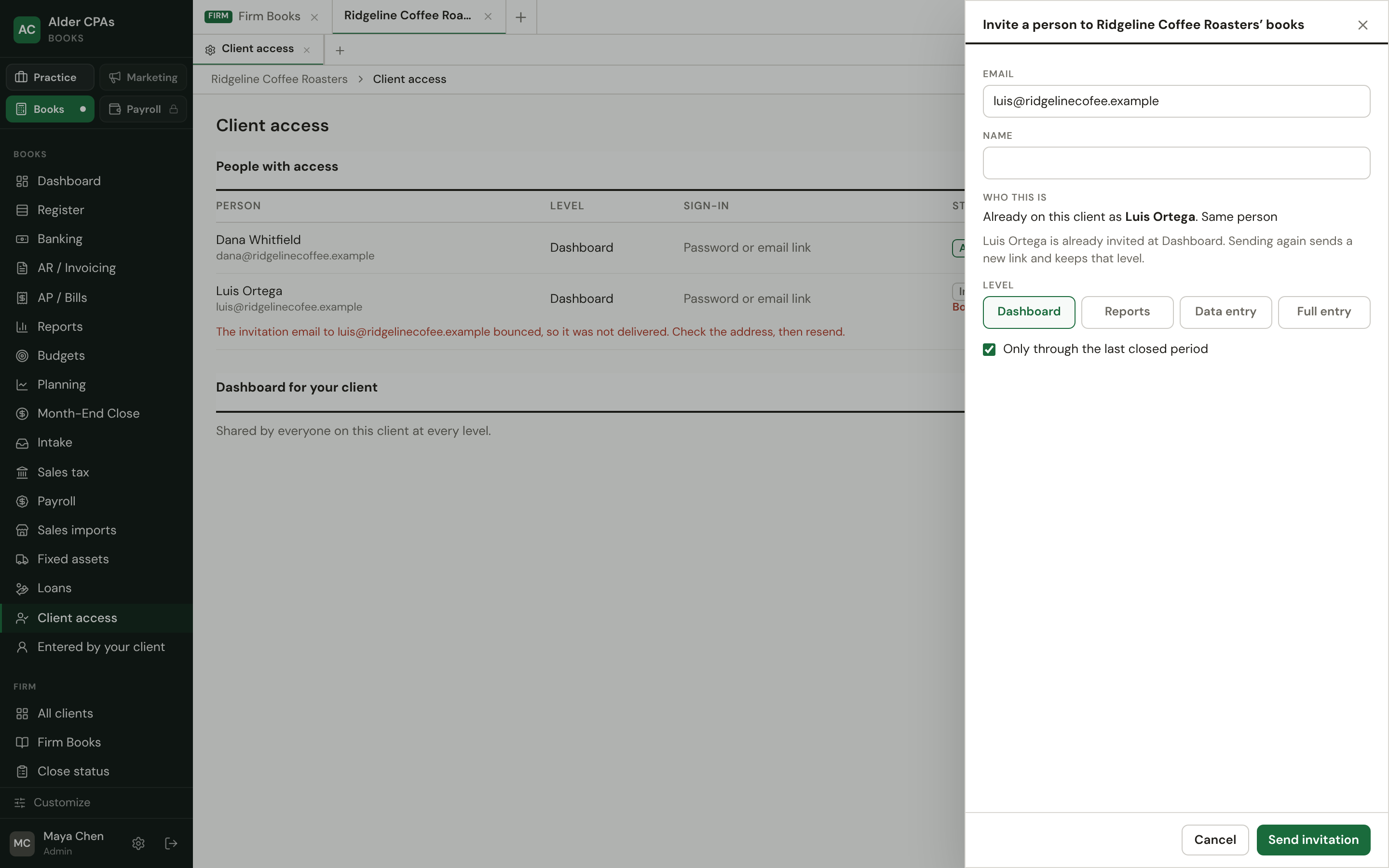 Inviting the same address again: Books keeps the level the person was invited at
On Settings → People → Team, an invitation whose email failed has a badge with the same label beside the address; hover it for the sentence. Click Revoke to drop an invitation to a wrong address and invite the right one with Invite someone.
To send to the same address again, click Invite someone with that address: Books tells you an invitation is already waiting and offers Resend, which sends it with a new link (The old link no longer works.).
A business keeping its own books sees the same badge on an invitation to its accountant, under Settings → Account → Your accountant.
The invitation couldn't be emailed at all
Sometimes Books records the invitation but can't email it, and says so in place of the usual confirmation. Two common reasons:
- Email sending is turned off for this firm, so nothing was sent.
- This address is on the firm’s do-not-email list, so nothing was sent. An earlier email to that address bounced, was marked as spam, or its owner unsubscribed. Invite a different address, or reach the person another way.
On Client access and Your accountant, Books shows the link under that sentence: copy it and send it to the person yourself.
A statement didn't arrive
Open the customer and look at Statements sent. Its State column reads Going out, Sent, Delivered, Failed or Not sent. Hover Failed for what happened:
- A bounce: The email bounced: the receiving mail server would not take it. Check the customer's email address; it can't be resent to this address. (or, for a full mailbox, The recipient's mailbox is full, so the email bounced. Ask the customer to make room or to give another address.)
- A spam report: The recipient marked the email as spam, so this address is on the do-not-email list. Reach the customer another way, or use a different address.
- A send canceled before it went out: The send was canceled before it went out. Resend to try again.
- Anything else says why it didn't go, in the same words as an invoice's Not sent line above, with statement in place of invoice, for example The statement could not be made for the email, so nothing was emailed. followed by Books' reason.
Hover Not sent and it says This address is on the do-not-email list, so the statement was not sent. After a bounce, a spam report or Not sent, correct the customer's email before you send the statement again; after any other failure, send it again from Email statement.
Questions to your client
A question to your client that bounced or was marked as spam shows Bounced or Marked as spam on Banking → Client questions, and one that never left shows Not sent, each with what to do. For a bounce or a question that never left, correct the contact's email, then withdraw the question and ask again. For a spam report, reach your client another way.